Chapter 3: Scenarios & Selection
Security Systems Lightning Protection and Grounding Design Guide
Security systems are deployed across a wide range of physical environments, each presenting a distinct combination of lightning exposure, grounding infrastructure, cable topology, and environmental conditions. Selecting the appropriate protection strategy requires matching the design approach to the specific scenario characteristics. This chapter presents eight representative deployment scenarios with their key technical parameters, selection guidance, and acceptance criteria.
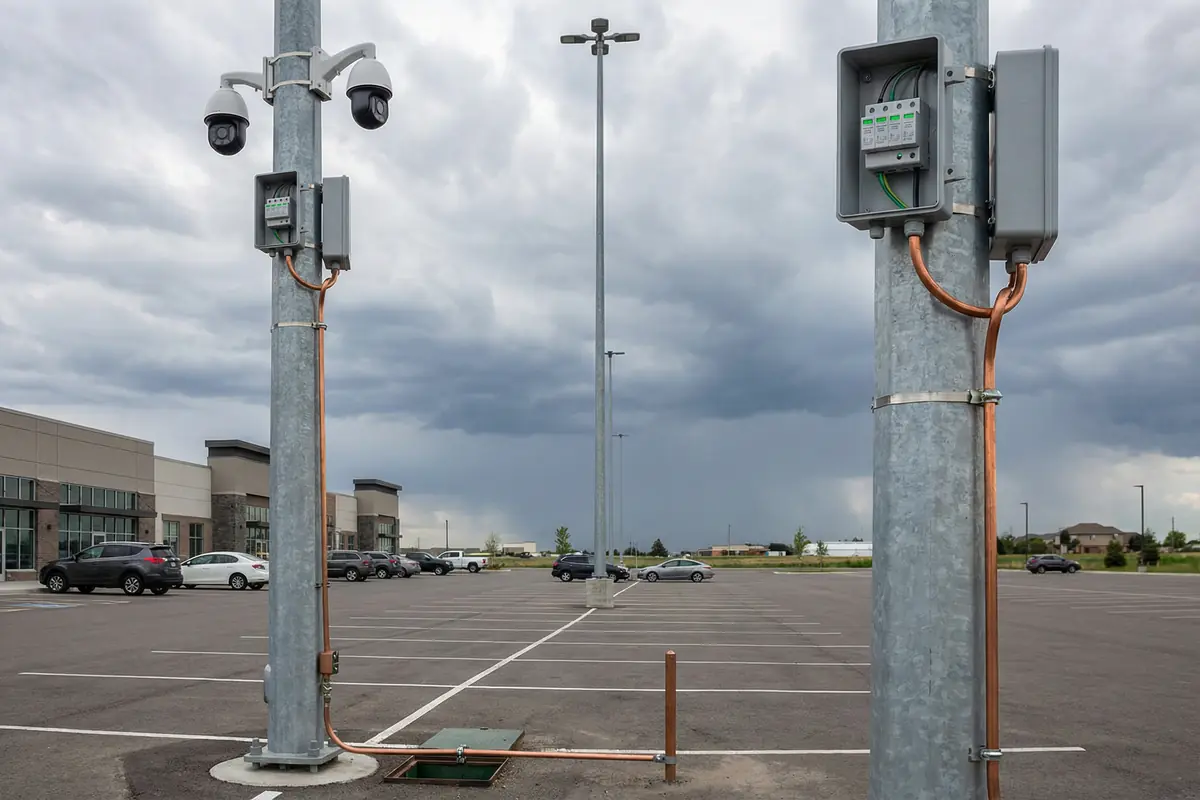
- Pole bonding: ≥ 16 mm² Cu to GES or LEB
- Field cabinet: Type 2 AC SPD + Ethernet SPD
- Preferred link: fiber from cabinet to building
- LEB in cabinet bonded to pole base
- Ground resistance target: ≤ 4 Ω at pole base
- IP66 cabinet; anti-corrosion paste on clamps
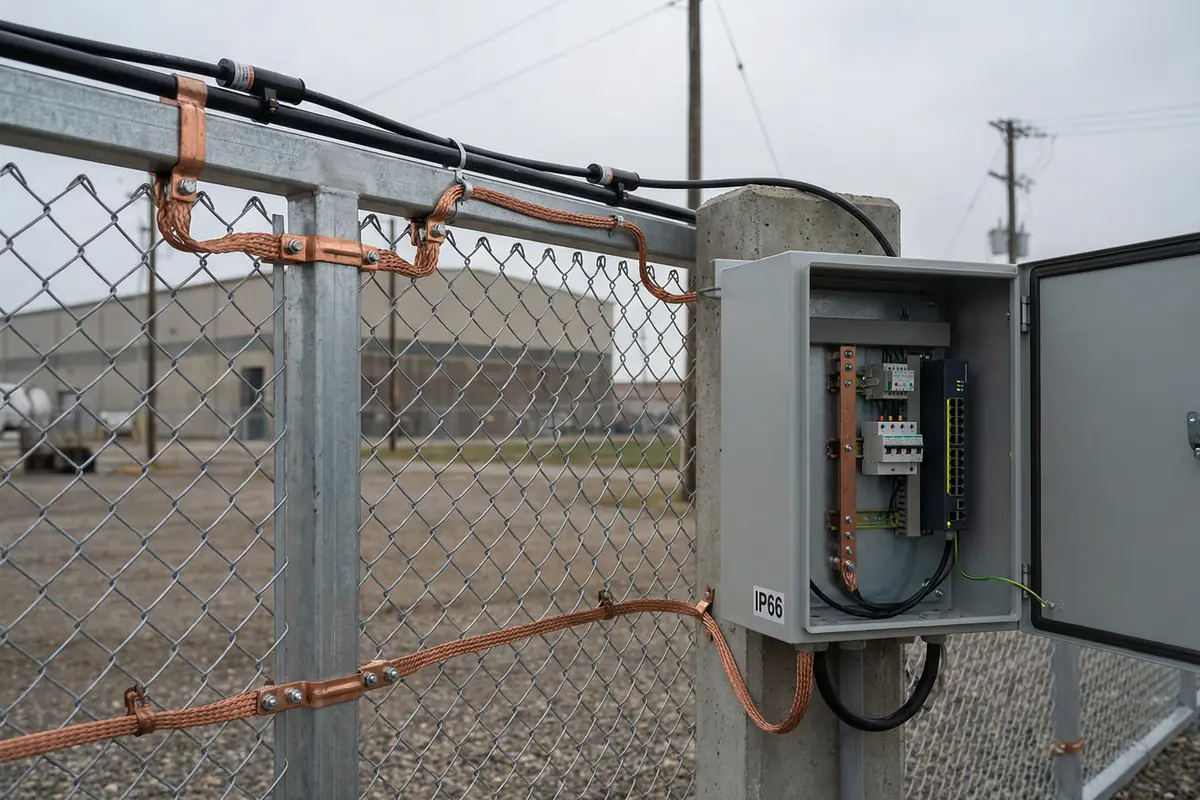
- Fence bonding: sections bonded every ≤ 50 m
- RS-485 SPD for detector communication lines
- Field cabinet LEB bonded to fence and GES
- Fiber preferred for inter-zone communication
- Bimetal clamps at all fence-to-conductor joints
- Quarterly corrosion inspection for coastal sites
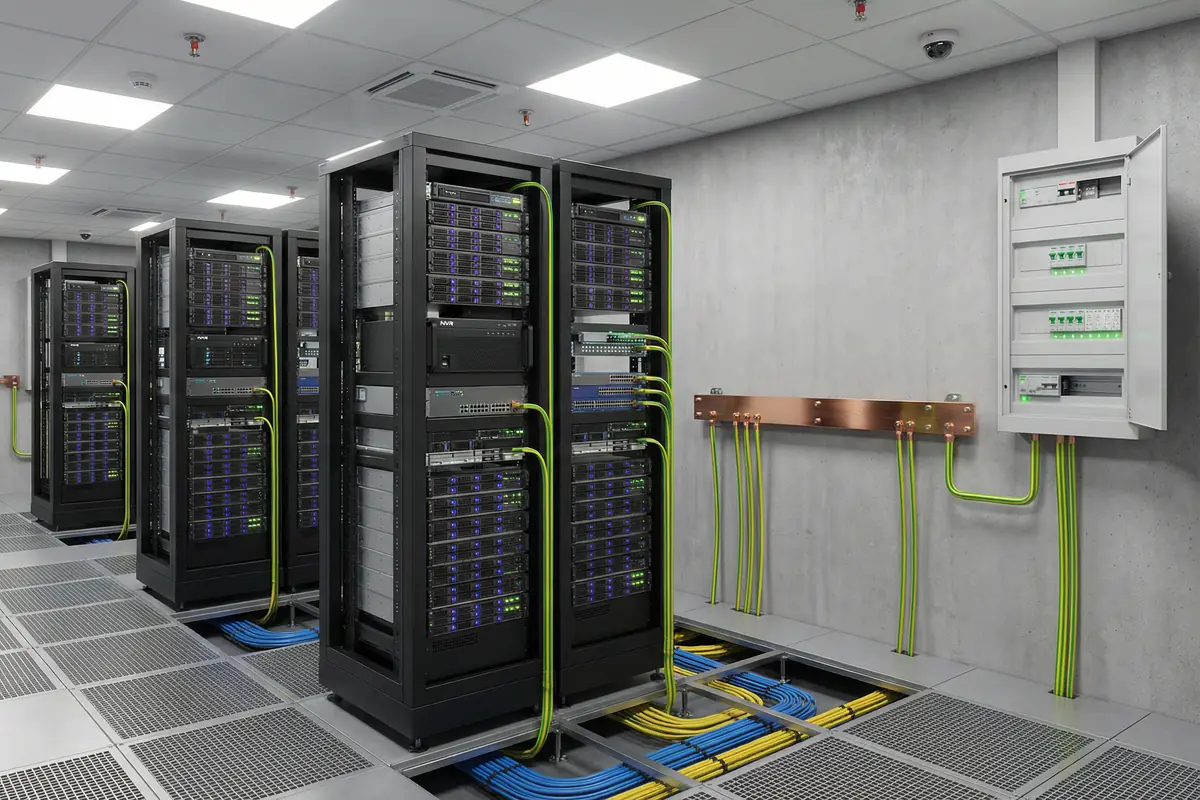
- MEB in weak-current room; all racks bonded
- Type 2 SPD at security DB; Type 3 at rack PDU
- Fiber for all inter-building and inter-zone links
- Raised floor earthing grid bonded to MEB
- SPD remote monitoring contacts connected to BMS
- Annual ground resistance test + continuity map
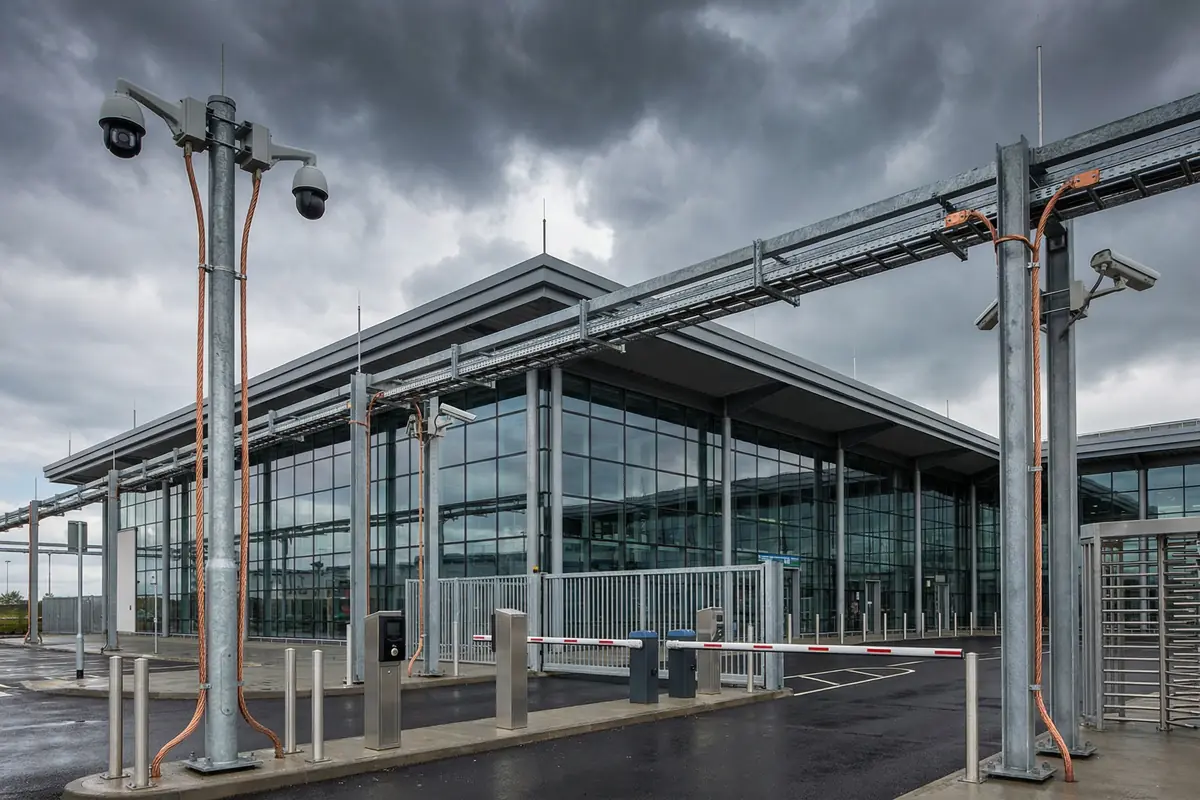
- Type 1 SPD at service entrance (high lightning risk)
- Fiber backbone for all inter-building links
- Redundant core switches with ring topology
- LEB in each field cabinet; bonded to structural steel
- SPD monitoring integrated with airport BMS/SCADA
- Post-storm inspection protocol; 4-hour MTTR target
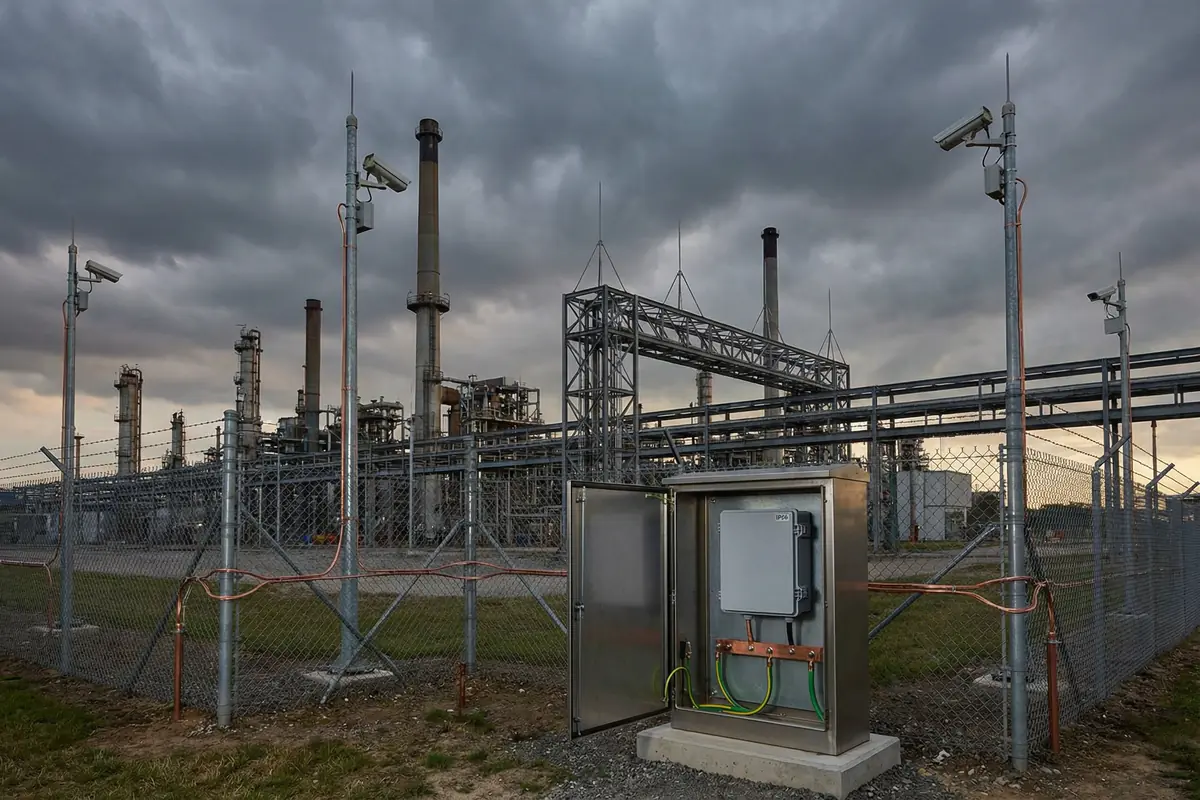
- Coordinate with plant GES; verify no shared neutral issues
- Heavy-duty Type 2 SPDs (Imax ≥ 80 kA) for high-risk areas
- Fiber isolation at all OT/IT boundaries
- IP65/IP66 cabinets; corrosion-resistant hardware
- Separation from VFD and motor cables ≥ 0.5 m
- Thermal scan of SPD and bonding connections annually
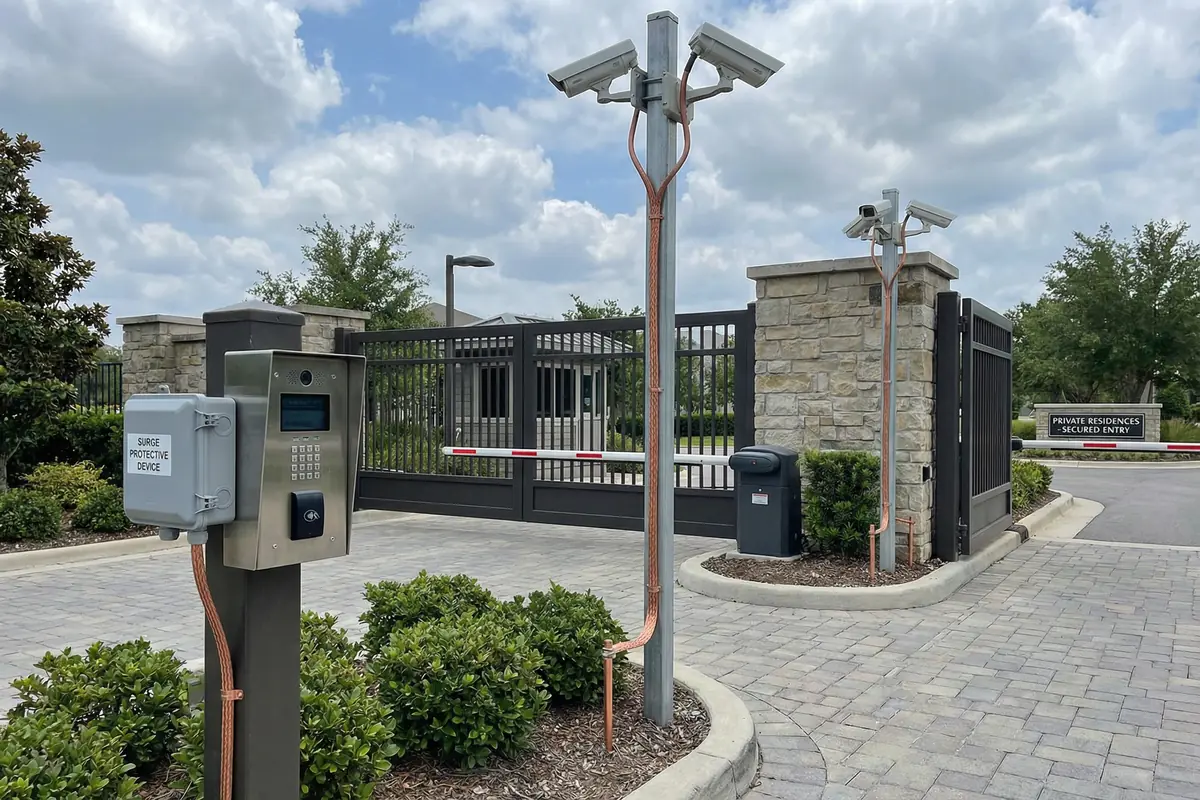
- Fiber media converter at entrance cabinet
- Type 2 AC SPD + RS-485 SPD in entrance cabinet
- Intercom pole bonded to GES or local electrode
- Electric lock DC power protected with DC SPD
- IP66 entrance cabinet with LEB and door strap
- Annual inspection; SPD cartridge spares on site
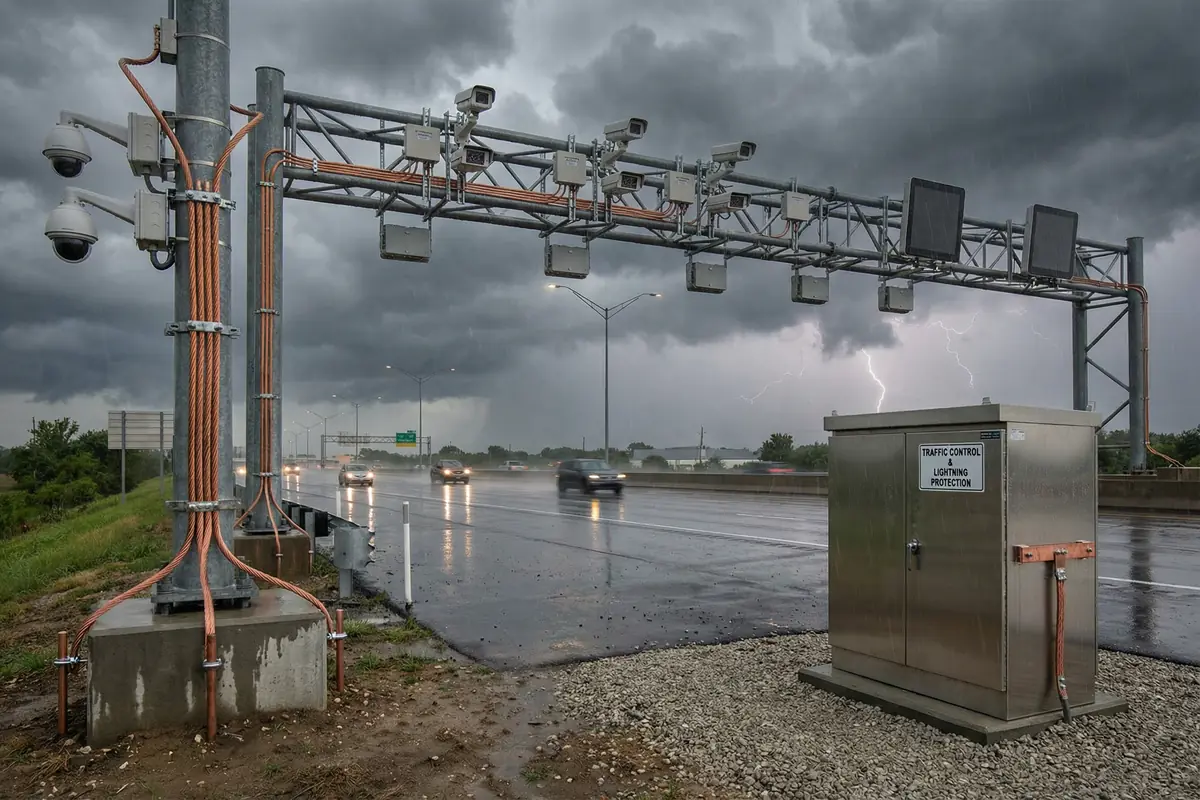
- Gantry structure bonded to GES at every base
- Fiber for all communication links along highway
- Type 2 SPD at each roadside cabinet; hot-swap cartridges
- LPR camera power: DC SPD + Ethernet SPD
- Ground resistance ≤ 10 Ω at each gantry (remote sites)
- Remote SPD status monitoring via management system
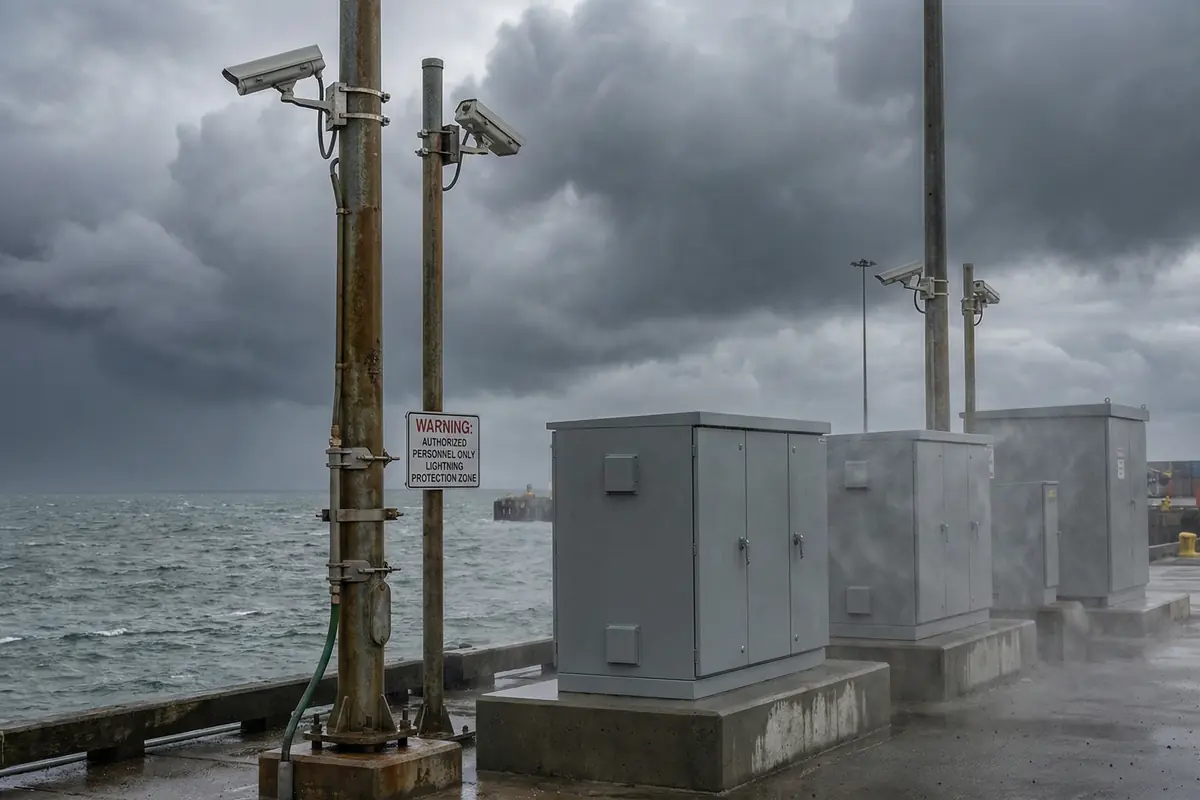
- 316L stainless steel or bimetal clamps throughout
- Anti-corrosion paste on all outdoor connections
- IP68 cable glands; double-sealed cabinet entries
- Quarterly corrosion inspection of all outdoor bonds
- Fiber for all outdoor links; no outdoor copper runs
- Ground resistance test after each storm season
3.1 Scenario Selection Guide
The selection of the appropriate protection strategy for a given deployment scenario is driven by four key factors: lightning exposure level, cable topology and length, environmental conditions, and availability requirements. The table below provides a structured selection guide that maps these factors to specific design choices.
| Scenario Type | Lightning Exposure | SPD Strategy | Link Strategy | Bonding Priority | Maintenance Focus |
|---|---|---|---|---|---|
| Open area / parking | High | Type 2 at cabinet + Ethernet SPD | Fiber preferred | Pole base bonding | Post-storm SPD check |
| Perimeter fence | High | Type 2 + RS-485 SPD | Fiber for inter-zone | Fence section bonding | Corrosion inspection |
| Server room / data center | Low-Medium (indoor) | Type 2 at DB + Type 3 at rack | Fiber inter-building | MEB + rack bonding | Annual continuity map |
| Airport / transit hub | High (outdoor structures) | Type 1+2+3 full chain | Fiber backbone | Structural steel bonding | BMS-integrated monitoring |
| Industrial facility | High + switching transients | Heavy-duty Type 2 (Imax ≥ 80 kA) | Fiber at OT/IT boundary | Plant GES coordination | Thermal scan annually |
| Residential entrance | Medium | Type 2 + RS-485 + DC SPD | Fiber media converter | Intercom pole bonding | Annual inspection |
| Highway gantry | Very High | Type 2 hot-swap at cabinet | Fiber along highway | Gantry base bonding | Remote SPD monitoring |
| Coastal / marine | High + corrosion | Type 2 + corrosion-rated hardware | Fiber (no outdoor copper) | 316L SS clamps + paste | Quarterly corrosion check |